Mushroom Identifier
Free mushroom identifier App by photo - Identify Edible & Poisonous Mushrooms and Fungi Instantly
Upload Photo For Free Mushrooms Identification
Upload a clear mushroom photo and our mushroom identifier returns a ranked list of likely species in seconds. Unlike basic image-matching tools, the system analyzes multiple structural features together — cap shape, gill attachment, stem characteristics, and habitat, to distinguish edible mushrooms from dangerous lookalikes like Amanita phalloides and Galerina marginata.
This multi-angle approach is what experienced foragers do in the field, compressed into a few seconds. Treat every result as a working hypothesis: confirm with a spore print, smell test, or qualified mycologist before handling or eating any wild mushroom.
Upload Mushroom Photos
Multi-angle analysis
📷 For best results, capture these angles:
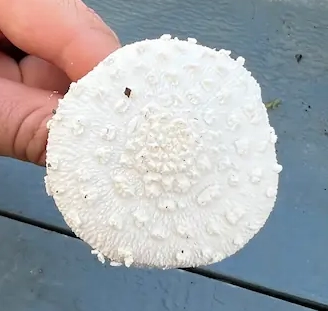
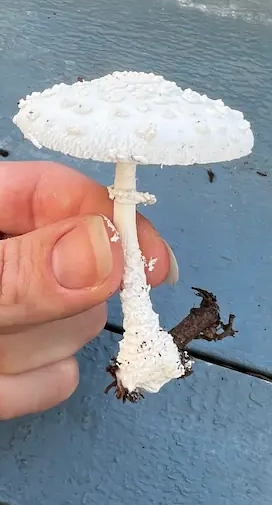
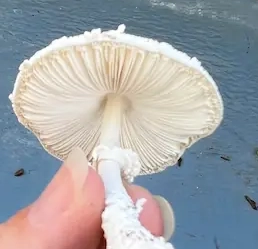
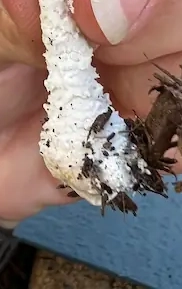
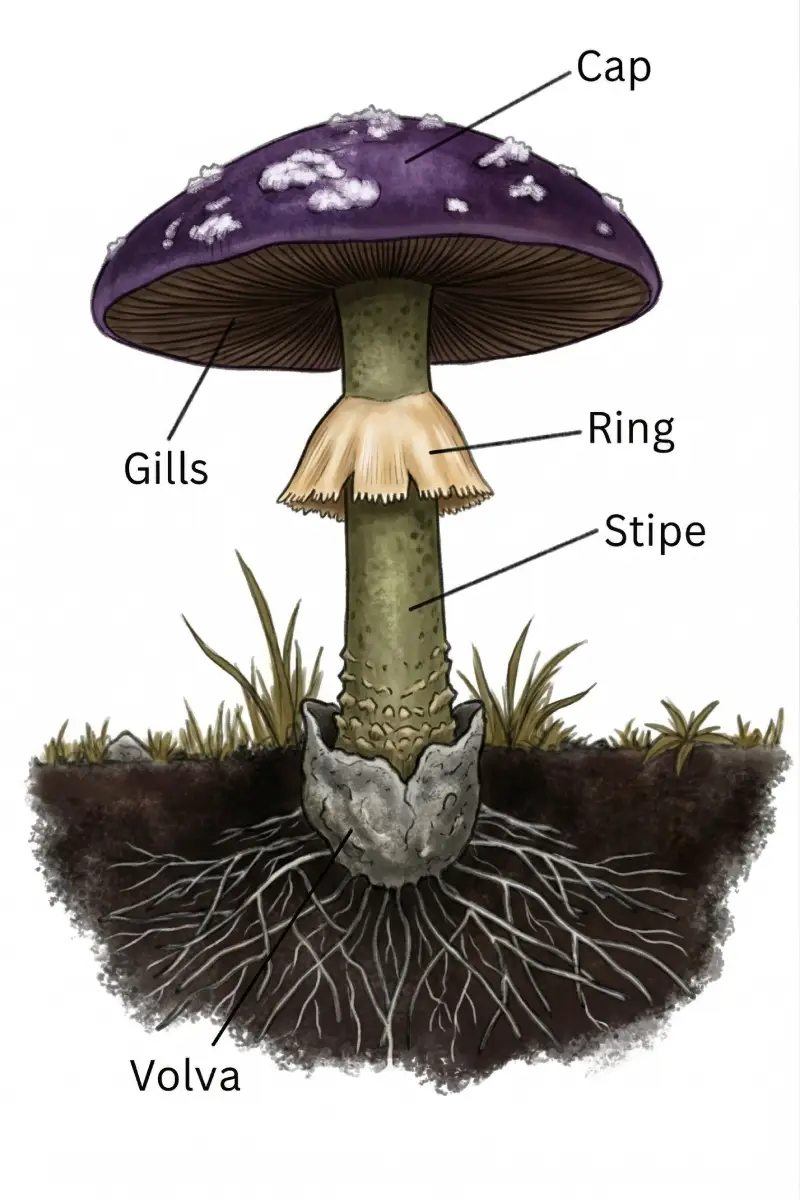
Mushroom Profile
Photograph each labelled part for highest AI accuracy
How Our Mushroom Identifier Works?
Our mushroom identifier follows the same observation process used by experienced foragers. For the most accurate results, focus on clear photos and careful review.
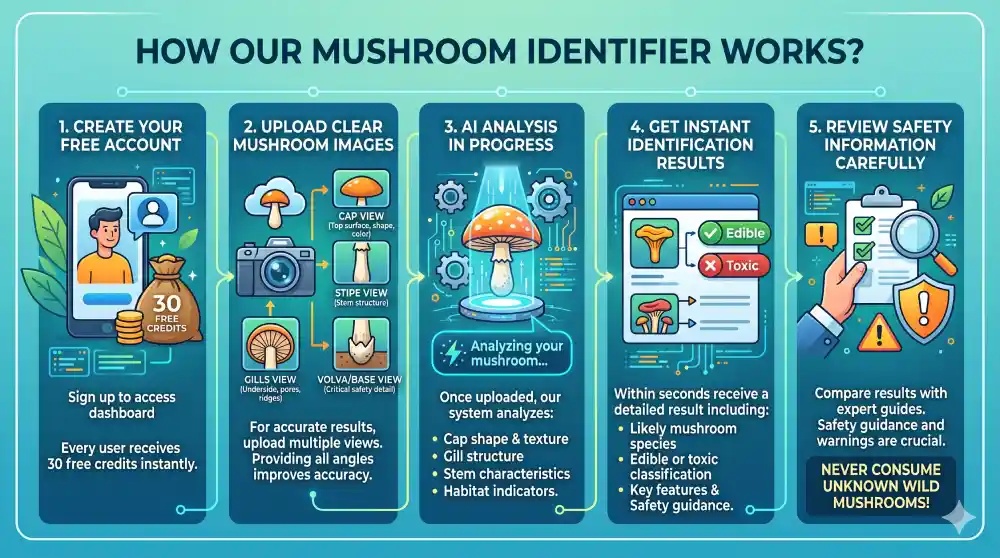
1. Take Clear Photos from Multiple Angles
Photograph the mushroom from:
- Top (cap)
- Underside (gills, pores, or ridges)
- Side view (stem)
- Base (gently expose it from the soil)
The base is essential for identifying dangerous species like Amanita phalloides. Missing this view is a common cause of mistakes.
2. Upload Your Photos
Upload your images to begin identification. Clear, well-lit photos with multiple angles produce the most reliable matches.
3. Analysis and Matching
The system compares your mushroom with a large database and returns the closest matches based on overall visual patterns.
4. Review the Results
You’ll receive:
- Most likely species
- Edibility or toxicity information
- Similar-looking mushrooms
Take a moment to compare your mushroom with the suggested matches.
5. Verify Before You Act
Always treat results as a guide, not confirmation.
If the mushroom could be eaten or handled, double-check using:
- A spore print
- A trusted field guide
- A qualified mycologist
Why Our Mushroom Identifier Delivers More Accurate Results?
Our advanced mushroom identification system is built to go beyond simple image matching. It combines visual analysis, scientific identification methods, and safety-first intelligence to deliver more accurate and reliable results.
Advanced Identification Powered by Real Mycology
Instant Toxicity Warnings and Safety Alerts
Lookalike Detection with Risk Analysis
Multi-Angle Mushroom Analysis
Global Mushroom Species Database
Emergency Support and Guidance
Detailed Scientific Mushroom Profiles
Best Photos for Accurate Mushroom Identification
The most accurate mushroom identification comes from photos that clearly show multiple structural features, not just a single angle. In Mycology, experts rely on details like cap shape, Gill structure, stem characteristics, and the base of the mushroom. A top-down photo alone is often misleading because many species look similar from above but differ underneath. To get reliable results, always include clear images of the cap, underside, stem, and base in good lighting.
One of the most critical images is the underside, where the gills, pores, or ridges are located. This is often the deciding factor between edible and poisonous species. For example, dangerous mushrooms like Amanita phalloides can only be safely identified when the base (volva) and gill structure are visible. Missing these details is one of the most common reasons identification tools give inaccurate results.
Including the surrounding environment also improves accuracy. Showing whether the mushroom is growing on wood, soil, or grass—and whether it appears alone or in clusters—helps narrow down species quickly. When possible, adding a Spore print can further confirm identification, especially for similar-looking mushrooms.
In short, the best results come from clear, well-lit photos taken from multiple angles, covering both visible and hidden features. The more complete your images are, the closer the identification will be to expert-level accuracy.
Explore Mushroom Identification Guides (Edible, Wild, Toxic & More)
Edible Mushroom Identification
Death Cap Mushroom Identification
Garden Mushroom Identifier
Tree Mushroom Identification
Psychedelic Mushroom Identifier
Turkey Tail Mushroom Identification
Brown Mushroom Identifier
Wild Mushroom Identification
Backyard Mushroom Identification
Oyster Mushroom Identification
Honey Mushroom Identification
Poisonous vs Edible Mushrooms
Habitat and Season in Mushroom Identification
Habitat plays a crucial role in accurate mushroom identification because many species grow only in specific environments. In Mycology, experts always consider where a mushroom is growing alongside its physical features. Whether a mushroom appears on wood, soil, or grass can immediately narrow down possible species. For example, mushrooms growing on dead wood belong to a completely different group than those found in lawns or forest floors.
Seasonal patterns also provide strong identification clues. Most mushrooms appear during cool, moist conditions, especially in autumn, while some species like Morchella esculenta are typically found in spring. Understanding when mushrooms grow helps eliminate incorrect matches and improves accuracy when using identification tools or charts.
Environmental factors such as nearby trees, moisture levels, and growth patterns further refine identification. Mushrooms may grow in clusters, rings, or alone, and some are closely linked to specific tree species. By combining habitat, season, and environmental clues, you can significantly improve identification accuracy and avoid confusing edible mushrooms with dangerous lookalikes.
Why Choose Our Mushroom Identifier?
Advanced Mushroom Identification Features
Compare how our advanced mushroom identification system performs against traditional field guides and other apps.
| Feature | Our Mushroom Identifier | Traditional Guides | Other Apps |
|---|---|---|---|
| Identification Method | Uses image analysis with multiple visual features for more reliable matches | Manual lookup using books and charts | Often relies on simple image matching |
| Toxicity Warnings | Highlights potentially dangerous species like Amanita phalloides | Requires prior knowledge | Limited or missing safety alerts |
| Lookalike Detection | Shows similar species and key differences | Manual comparison required | Rarely identifies risky lookalikes |
| Photo Analysis | Works best with multiple angles (cap, underside, stem, base) | Depends on user observation | Usually based on a single image |
| Speed | Results in seconds | Time-consuming manual search | Varies by app |
| Coverage | Includes species across different regions and habitats | Often region-specific | Limited database |
Limits of AI in Mushroom Identification
AI identification works from photographs alone—and that limitation is more important than most people realize. Images can capture shape, color, and texture, but they cannot detect smell, taste, bruising reactions, or spore print color. These are critical identification signals used in field mycology.
Visual similarity is another challenge. Some of the most dangerous mushrooms closely resemble edible species. For example, Amanita phalloides (death cap) has been mistaken for common edible mushrooms, while Galerina marginata looks similar to harmless brown species but contains deadly toxins. From a photo alone, no tool can distinguish these with complete certainty.
What this tool does well is narrow down possibilities. It provides a ranked list of likely species, highlights dangerous lookalikes, and gives you a starting point for further verification.
Before consuming, handling near children, or feeding to pets:
- Check additional features such as bruising and smell
- Confirm with a spore print
- Consult a qualified local mycologist or mycological society
👉 Treat every result as a hypothesis—not a final identification.
Frequently Asked Questions
How accurate is the mushroom identifier?
Our mushroom identifier is built using advanced AI and real-world principles from mycology, delivering highly accurate results when you upload clear, multi-angle photos. It analyzes features like cap, gill structure, stem, and base to improve precision.
Hint: For best accuracy, always upload multiple angles (not just one photo). No tool should be treated as 100% final—always verify important results.
Can I use the mushroom identifier offline?
No, currently the mushroom identifier works only online. It requires an internet connection to process images and access the global database.
Hint: Use it on mobile or desktop with a stable connection for faster results.
What should I do if I accidentally ate a poisonous mushroom?
If you suspect mushroom poisoning, seek medical help immediately. Do not wait for symptoms. You can also check your mushroom using the tool to understand possible risk levels, but medical attention is the top priority.
Hint: Early action can prevent serious complications.
Can I take a picture of a mushroom and have it identified?
Yes. Simply upload photos to our tool, and it will analyze the mushroom and provide identification results along with safety insights.
Hint: Upload cap, underside, stem, and base images to get the most reliable result.
Is the mushroom identifier free?
Yes, we offer 30 free credits so you can test and identify mushrooms without any cost.
Hint: Use your free credits to test different mushrooms and learn how identification works.
How many photos should I take for mushroom identification?
For best results, upload at least 4 clear images: cap (top view), stem (stipe view), underside (gills or pores), and base (volva view).
Hint: More angles = higher accuracy and safer identification.
Does the mushroom identifier work worldwide?
Yes, our tool supports global mushroom identification, covering different regions, habitats, and seasonal variations.
Hint: Include habitat (wood, soil, grass) in your photos for better results.
Can beginners safely use this mushroom identifier?
Yes, the tool is designed to be simple and beginner-friendly, while still using expert-level identification logic.
Hint: Always follow safety guidance and never eat a mushroom unless you are completely sure.
Do I need to create an account or sign up?
Yes, you need to sign up to access the dashboard and use your 30 free credits.
Hint: Creating an account lets you track results and use all features.
Is there a limit to how many mushrooms I can identify?
Yes, you can identify up to 30 mushrooms for free using your credits. After that, you can upgrade to a monthly plan for unlimited use.
Hint: Use your credits wisely by uploading clear, multi-angle photos for accurate results.